
On Who Gets to Write the ‘Hollowed-Out Other’
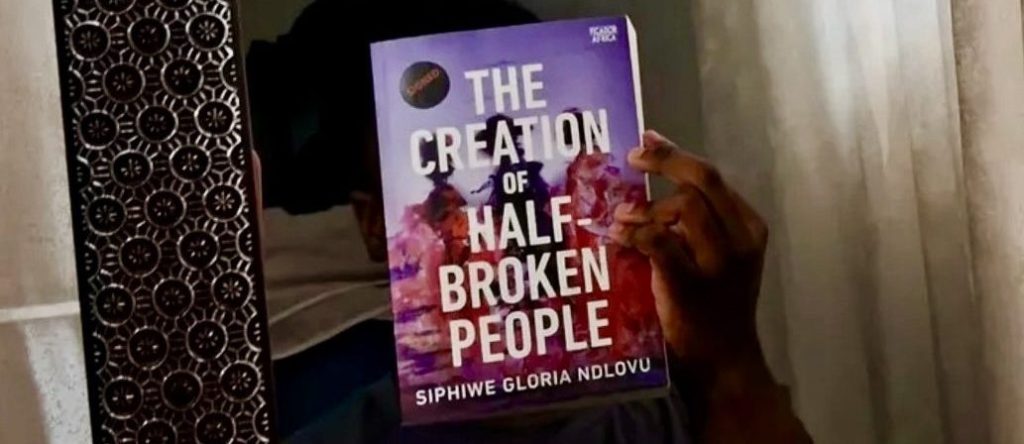
My mother is capable of many things. She is particularly good at at culling, hollowing things out, removing what is inside.
—The Creation of Half-Broken People, Page 38.
Synopsis
Set across different centuries, The Creation of Half-Broken People follows a nameless woman haunted by visions. She works at a museum owned by the affluent Good family—descendants of Captain John Good from King Solomon’s Mines—where she preserves artefacts inherited from their colonial past. Her life shifts during a protest outside the museum when she encounters a spectral old woman visible only to her. The experience awakens buried memories and transforms her understanding of herself as the voices and experiences of ancestral women begin to inhabit her consciousness, carrying her from a lonely attic room to a sprawling castle. Drawing on the Gothic tradition, Siphiwe Gloria Ndlovu layers history and the present to examine the enduring effects of colonialism, patriarchy, and capitalism on her characters’ lives.
There was a time before this. I did not always live in the attic.
—The Creation of Half-Broken People, Page One.
Introduction
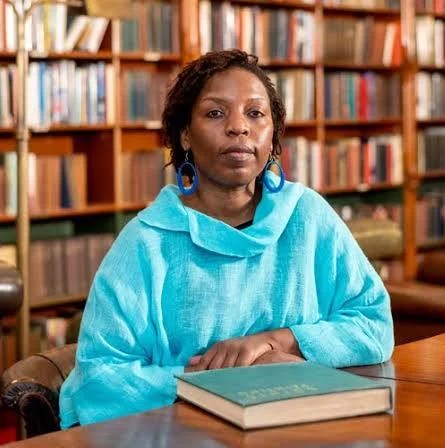
Be not afraid of brokenness. Some are born broken, some become broken, and some have brokenness thrust upon them. No matter the circumstance, brokenness does not happen in isolation. It is produced by histories and systems that decide, often from birth, who is permitted wholeness and who is left hollowed out. The question of the hollowed–out other, and of who gets to write the hollowed–out other, forms the core of The Creation of Half–Broken People. The author gives weight to marginalised people, mainly women, whom colonial archives and patriarchal histories have rendered anonymous.
Siphiwe Gloria Ndlovu weaves the stories of these people across centuries, questioning the naming that happened to them along the way. Speaking of the long line of mentally ill women in her family, the unnamed, anonymous narrator says, “They were not mad, they were just women.” This, and many other lines throughout the text, settle on a question of identity. Specifically, the novel asks, “Who are you, really?” and, “Who decided that?”
Matters of Belief
The characters are born into worlds whose power structures already exist, and each is expected to become a useful part of them. A character is never just a man or just a woman or just something in between. The world within which they exist demands them to be defined against the backdrop of other things in that world, regardless of the fact that sometimes, the world might not be big enough to encompass the true depth of certain forms of being, of existing. This is most apparent in the case of Benedito Da Costa, a Goanese who is as much African, as he is Asian and European. Failing to understand how one person can be all three at once, a clerk at the Rhodesian immigration office asks what race and nationality Da Costa wants him to believe he is, to which Da Costa says, “What I am is not a matter of belief, sir. It is just who I am.”
Da Costa chooses to assert himself as a whole, in a world that can only appreciate him in part. It is no surprise, then, that Beloved is one of the texts Ndlovu quotes. Da Costa’s conduct takes a great deal of confidence and hearkens to Toni Morrison’s declaration in Beloved, “You are your best thing.” People need confidence and self–esteem in order to exist in a world that constantly seeks to take from, undermine, belittle and trample upon them. This novel, just like Beloved, understands that dignity, on a personal level, can only come from valuing oneself.
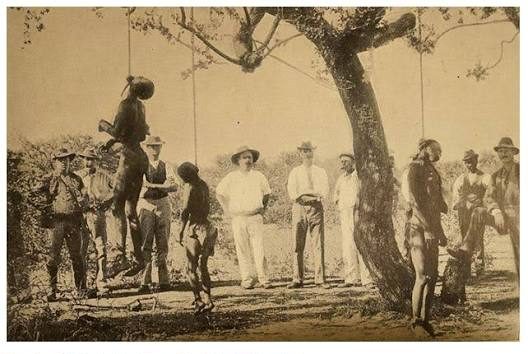
Another character, Patrick H. Battison, realises, too late, that he has worked too well in the role assigned to him by the colonial government. He realises that his work as an executioner has traumatised and rendered him a half–broken thing. Tormented by the sound a life makes when it leaves a body hanging on a noose—that crack and snap—he buys a mirror, not because he is a vain man, but because he desperately needs to remind himself that he is a man, still. Recognising that he barely remembers who he was before he became an executioner, he understands that,”when you are told you are one thing and you believe it, it takes a miracle for you to know otherwise.”
This naming, this shedding of a self to wear another that is more respectable, more useful to society, dawns on Da Costa not too long after he states that his identity is not a matter of belief. He learns, after the immigration clerk pens him down as a “European of Portuguese extraction,” that despite his fight to name and exist as himself, the colony would only recognise him as one thing. Yes, there’s dignity that comes from valuing oneself, but when your society does not value you in return, that dignity can only be internally felt. The result of the fight to name oneself is often a battle–wounded, slightly crooked half–broken thing. Rather than Goanese—European, African and Asiatic—he becomes a European of Portugese extraction, an incomplete thing that makes sense within, and only within Rhodesia.
The women in this novel find themselves under similar circumstances. When they fail to embody the patriarchal femininity of white settler colonialism, they become other things—mad women, women with histories of violence, vulture–like, monkey–faced things named Gagool. These women find themselves chained to hospital beds, sedated, lobotomised (yes, they lobotomised women in Rhodesia) and eventually erased from a world that finds them too powerful, too threatening. Such women must be broken down. But still, they live. Lauding the resilience of these women, Ndlovu hearkens to Lucille Clifton’s famous poem; so won’t you celebrate with them, that everyday, something has tried to kill them and has failed.
Conclusion
The text ends on a hopeful note. The closing line, “There will be a time after this,” assures the reader that while some things endure through centuries, none of them are permanent. All stories eventually end. Some half–broken people make impossible things possible. Ndlovu refuses to imagine healing as the erasure of the painful parts of history. Her characters do not become whole because the violence disappears. The violence remains, but so do they, whispering to themselves, “There will be a time after this.” Just as there was a time before the anonymous woman was locked up in the attic, there was also a time after.
Four women went in search of water; and because of the wisdom of one of them, impossible things can still be made possible in this world.
—The Creation of Half-Broken People, Page 254.
Note: This is the fourth book in what Ndlovu revealed is meant to be a seven–part collection of interconnected novels set in Bulawayo, the City of Kings. This is the first book I’ve read in the series, and at the time I’ve writing this review, I am reading The Theory of Flight and can’t wait to work through the other books too. There’s so much to talk about in relation to The Creation of Half–Broken People, but I feel some of the imagery, like that of the giant pair of silver wings, will make better sense to me once I’ve read the other books. I still enjoyed Creation as a standalone. It definitely piqued my interest and I just had to work my way backwards. I was fortunate enough to interact with Ndlovu when I read the book for the first time with the Harare Book Club. You can check out the discussion, which features a reading of one of my favourite passages, here.
Have you read Ndlovu’s work? Will you be checking her out after this? Let me know in the comments below.
 By Augustine