
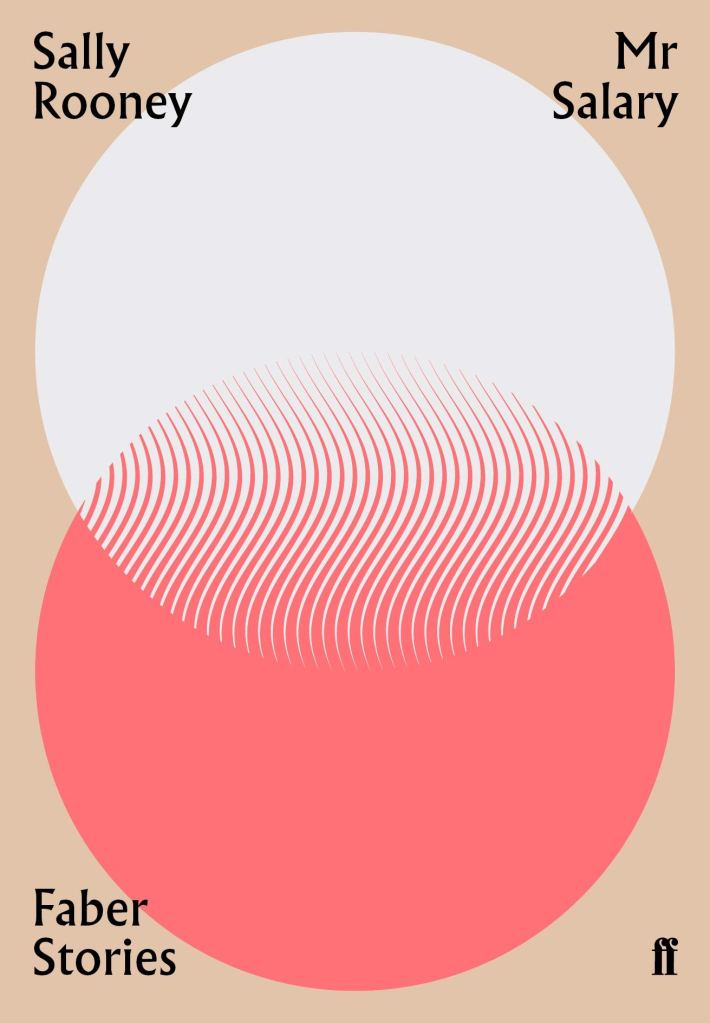
Mr Salary shows Sally Rooney at her best, or rather, at her most comfortable. She writes about characters in unconventional relationships (echoing the age gaps in Intermezzo and Conversations with Friends), and interrogates the role that wealth and social class play in these relationships (again, echoing Intermezzo and CWF, but more strongly, Normal People). How does Sally Rooney keep getting away with writing the exact same story, in different words?
She doesn’t. Write the exact same story, that is. Although there are broad thematic elements in Rooney’s work, what sets each publication apart is the very honest feel that each of her characters have. In her riveting 10-minute rant on Marxism and literature on the Louisiana Channel, Rooney says,
I need to feel that I can make something from my experiences because otherwise I don’t know what they are.
Further, she describes fiction as an avenue that allows her to make different human experiences not just “technically true” by putting them on the page, but also “emotionally true.”
Her ability to zoom in on the complicated nature of human relationships under capitalism, and the inevitable transactional nature of these relationships, is what makes Rooney’s work compelling. She writes about characters in similar socio-economic settings, but does so without flattening them out into one winding cliché. In crafting characters that are accessible, flawed and beautiful on a human level, each of her books becomes emotionally true.
These cells may look fairly normal, but they’re not
Now, about Mr Salary. Sukie finds herself in a complicated position after her mother dies. Her father, Frank, develops an addiction to prescription opiates, so she is often left in the care of his friends,
who gave me either no affection or else so much that I recoiled and scrunched up like a porcupine
When she turns nineteen, she ends up in the care of Nathan, thirty-four, whose older sister was married to an uncle of hers. Against the looming threat of Sukie’s father succumbing to leukemia, Rooney weaves, in under 40 pages, a suspenseful kind of ‘Will they? Won’t they?’ dynamic between Sukie and Nathan. They flirt with each other to a point where Nathan drunkenly kisses Sukie and pretends it never happened once he sobers up, and the reader has to sit through uncomfortable conversations between them, including one where Sukie asks, “Would you grieve if I died?” and follows up with, “I just want to know you love me.” The sexual and emotional tension between them, as well as the power dynamic created by Sukie’s financial reliance on Nathan, makes for a riveting and emotionally compelling read.
 By Augustine
Leave a comment