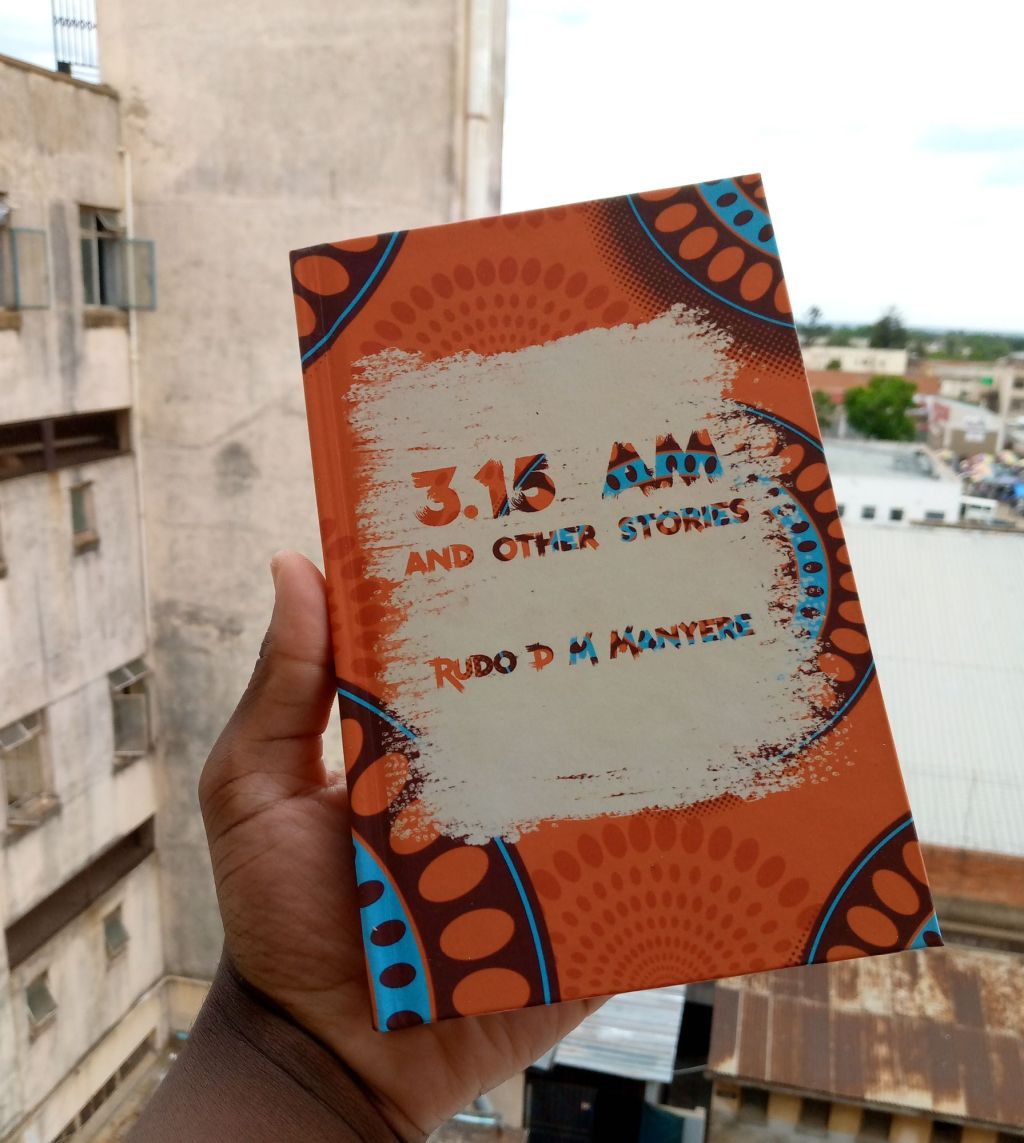
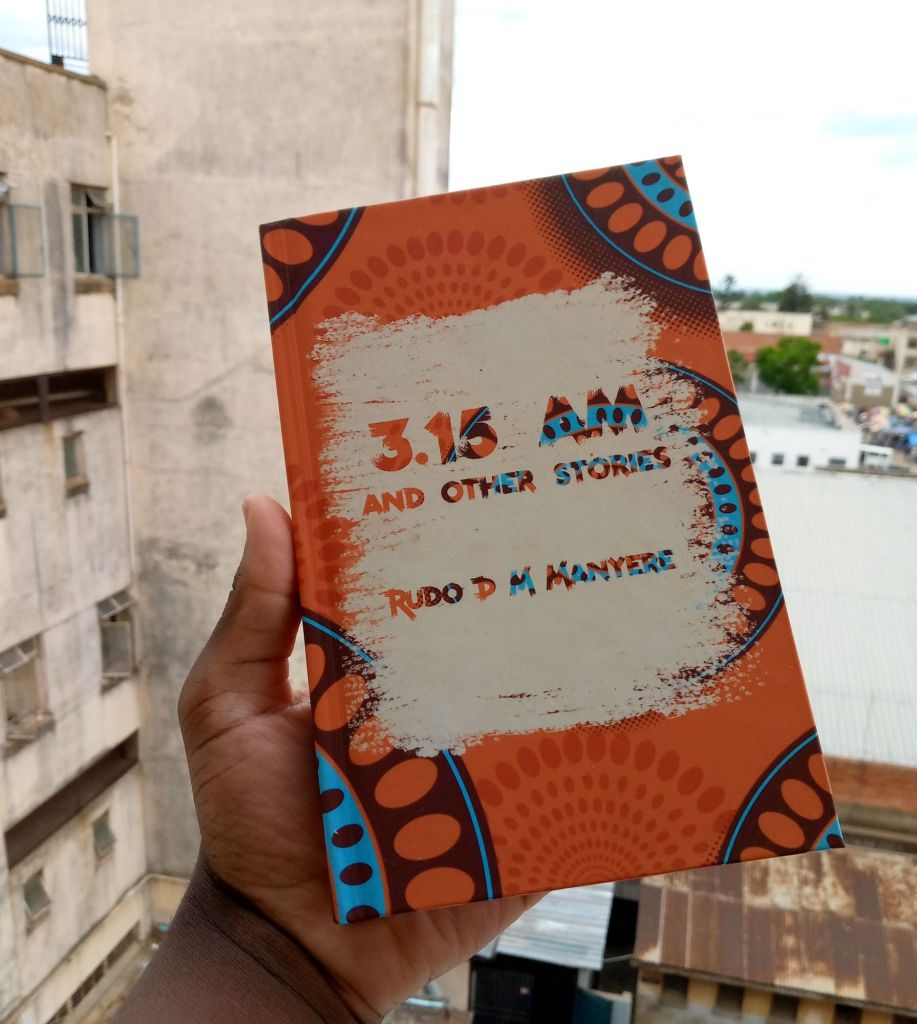
I grew up reading books that felt foreign and dishonest, with characters I could not relate to and whose lives I could not quite emulate. From Hans Christian Andersen to Roald Dahl and Enid Blyton, my young imagination was fed by stories of talking mermaids and child detectives, who outsmarted the police and ate cucumber sandwiches. While the books were undeniably enjoyable(they were always a better option than sunrise readers anyway), they lacked a kind of familiarity and seemed to suggest that stories like my own were not fit to exist in bestselling books. Rudo Manyere’s stunning debut took me back to my childhood and reminded me of the celestial bliss that was my discovery of Zimbabwean literature.
A kaleidoscopic collection of short stories exploring themes close to Rudo Manyere’s heart. Set in Zimbabwe, a motley of carefully crafted characters journey with you through a beautifully executed debut by a gripping new voice.
Samantha Rumbidzai Vazhure, publisher and author of ‘Starfish Blossoms’
In this article, I will discuss each of the nine stories, revealing the aspects that drew me closer to the characters in each one.
Kuaruone
This story addresses the plight of post-independence African immigrants in the UK, who upon escaping a myriad of challenges within their home countries, are faced with a completely new set of problems in a foreign land.The main character’s name is Kurauone Nhamo and if you’re Zimbabwean, you’re probably digging the witty nomenclature.
It dwells upon suffering and disillusionment the most, but also touches upon such themes as love, family, heritage and race. This story portrays love and loss in the midst of chaos and in some parts, keenly reflects Chimamanda Ngozi Adichie’s ‘Americanah’.
At the end of the month
Revealing the close-knit relationship between a father and his son, this story primarily raises the issue of cultural heritage.
Manyere vehicles the importance of dialogue with one’s elders, while reflecting the worker’s plight, one that involves experiencing true happiness only on payday, at the end of the month.
1965
It is scientifically proven (by my right big toe) that there is no story ever told, that is greater than a forbidden romance. In fact, some of the greatest works of art ever made—Shakespeare’s “Romeo and Juliet”, Taylor Swift’s “Love Story” and every low-budget Nollywood film ever made—border around the particular theme. However, in an attempt to reflect the racial issues that plagued Rhodesia, Manyere takes the story in a direction much more like Collette Mutangadura’s “Rutendo”, by outlining the problems that affect the biracial couple, Natsai and “mudhara Tom”.
While racism is a prominent theme in this story, it would be inept to ignore the immensely human element that led some of the characters to make compromises that put their own lives at risk. It celebrates the beauty of humanity, the courage that sacrifices logic and priorities emotion, the type that enforces what is kind, thoughtful and right.
The issue of ‘African culture’ and gender expectations is also alluded to in Gumi and Shuvai’s relationship, by how Gumi’s friends are uncomfortable around a woman who drinks and smokes as shamelessly as they do. According to them, it is unseemly for an African man to marry a woman who exhibits traditionally ‘masculine’ behaviours. Find my personal thoughts on African culture and marriage here:
It should be noted that in the end, the hospitality, care and kindness of Vongai and Tunga was met with betrayal, an element which mirrors Ndhala’s “Jikinya” and justifies the widespread mistrust of whites by black Zimbabweans.
Farisai
The title of this story should really be “stalker” because WHAT? I mean, how do you track down a high school lover(who is married btw and whose heart you broke) and consider moving to Malaysia to keep spying on them?!?
In this story, the author exposes the economic challenges that affect ordinary citizens, while weaving their daily struggle into the tale of a stalker who might just send their therapist to therapy.
Tamuka
Delving into the classic supernatural element that built “Mai Azuka”’s career and gave Chipinge its reputation(you know the one💀), Manyere takes the reader through a n’anga’s divination process and the demise of a woman who kills her husband (yes, she even turns into a snake). Exploring such issues as spirituality and culture, the author succeeds in sculpting a reflection, rather than a caricature of Shona spiritual beliefs.
Pamushana
Sometimes when you read a book, there are parts of it you love so much that you know you’ll keep coming back to them. ‘Pamushana’ is, hands-down my favourite story in this collection. An exuberant love story that contrasts youth and old age while being a chronicle of tribal issues in Zimbabwe, this story will be the main reason I ever recommend this book to anyone. It kept me on the edge of my seat and *almost* brought me to tears.
Nyarai
Frederick Douglass’ narrative was one of my assigned texts for A Level Literature in English. During one of our class discussions, I remember my teacher asking if we were any different from the slaveholders, based on the way we treated our own domestic help. Tinatswe Mhaka has hinted at how inhumane and cruel some families are to their ‘maids’, and this is reflected by how in this story, it is Nyarai, the help, who ultimately suffers from the misdeeds of her employers. The story also exposes the hypocrisy of church leaders and this is further hinted at by the title, “Nyarai” (have some shame, decorum).
3:15 AM
Weird and terrifying things are known to happen at between 3 and 4 am, as it is believed to be the “the devil’s hour”.
In this story, the narrator is confronted by a girl whose death she had a hand in, and tries to find peace despite the ghost’s constant visits at 3:15 AM.
Chipo
This particular story left my feelings all over the place. For this one, I’ll just leave a quote, my favourite one from this collection.
“They say you never miss a good thing till it’s gone, but what do you do when it’s within reach, and see it slipping away?”.
What I loved most about this book was how raw it was and in how in some parts, it felt like I was listening to stories from a old friend.
 By Augustine
Leave a comment